Institutional Profile & Governance
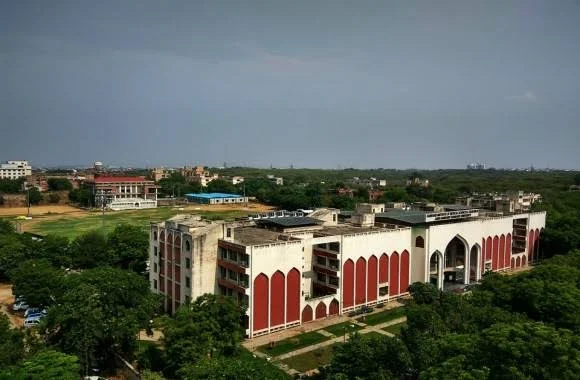
ESIC Medical College, Basaidarapur, New Delhi, established in 2025, operates under the Employees' State Insurance Corporation (ESIC), Ministry of Labour & Employment, Government of India. This government institution aims to provide quality medical education and healthcare services, particularly to insured persons, staff, and their families, aligning with its public health mission. While not yet ranked in the NIRF 2025 top 100, the college is a new entrant in medical education, building upon the legacy of the erstwhile Postgraduate Institute of Medical Sciences and Research and ESI Model Hospital at Basaidarapur.
Academics & Training Framework
The college is committed to fostering a strong academic foundation and research temperament among its students.
- MBBS Program: The institution offers a 5.5-year NMC-compliant MBBS curriculum, comprising 4.5 years of academic study followed by a compulsory 1-year rotating internship.
- Annual Intake: ESIC Medical College, Basaidarapur, has an annual intake of 50 MBBS seats.
- Admission: As a government institution, admission to the MBBS program is based on the NEET-UG examination, followed by counselling conducted by the Medical Counselling Committee (MCC) or state authorities.
- Postgraduate Programs: The institution previously ran postgraduate courses in 11 departments, including one super specialty department, since 2010. These included MD/MS courses in General Medicine, Microbiology, Pathology, Anesthesia, Orthopedics, Dermatology, Obstetrics & Gynecology, General Surgery, Ophthalmology, and Pediatrics, as well as a DM in Pulmonary Medicine.
- Affiliation: The college is affiliated with Guru Gobind Singh Indraprastha University, New Delhi.
Academic Fees & Structure
As a government medical college operating under the Ministry of Labour & Employment, Government of India, the academic fees are structured to be accessible.
- MBBS Fee: The MBBS fee is heavily subsidized, reflecting its status as a government institution.
- Hostel & Living: Information regarding hostel and living costs is not explicitly detailed but is generally structured to be affordable for students in government institutions.
Clinical & Hospital Infrastructure
The college leverages the extensive clinical infrastructure of ESIC Medical College & Hospital, Basaidarapur, a tertiary care institution with a long-standing history of providing healthcare services.
- Teaching Hospital: The ESIC Medical College & Hospital, Basaidarapur, serves as the primary teaching hospital. It is a 600-bedded facility with an approved plan for expansion to 1000 beds, including specialized units like SICU, ICCU, RICU, and PICU. A proposal to increase ICU beds to 100 is also under consideration.
- Departments & Specialties: The hospital offers a wide range of services across various clinical specialties, including General Medicine, General & Minimally Invasive Surgery, Pediatrics, Obstetrics & Gynecology (with an IVF Centre), Orthopedics and Spinal Surgery, Pulmonary Medicine, Dermatology, Ophthalmology, ENT, Psychiatry, Community Medicine, Ayush, and Day Care Oncology. Para-clinical departments such as Pathology, Hematology, Microbiology, Pharmacology, and Forensic Medicine, along with pre-clinical departments of Anatomy, Physiology, and Biochemistry, are also well-established.
- Research & Centres of Excellence: All departments are actively involved in research activities and publications. The institute features a fully functional medical education unit that regularly conducts developmental programs and offers opportunities for applied research, fostering a research temperament among students.
Campus Amenities & Student Ecosystem
The college provides a supportive environment for medical education and student development, integrating academic and extracurricular facilities.
- Accommodations: Specific details on student accommodations are not explicitly provided on the website, but typically, government medical colleges offer hostel facilities for their students.
- Learning Resources: The institution provides essential learning resources, including well-established pre-clinical, para-clinical, and clinical departments. The active involvement in research and publications across all departments suggests access to relevant academic materials and research facilities.
- Recreation & Wellness: While specific recreational facilities are not detailed, the emphasis on a holistic educational experience implies provisions for student well-being. The institution's focus on research and medical education contributes to a dynamic academic environment.
 Government
 Private
 Government
 Deemed