Loading...
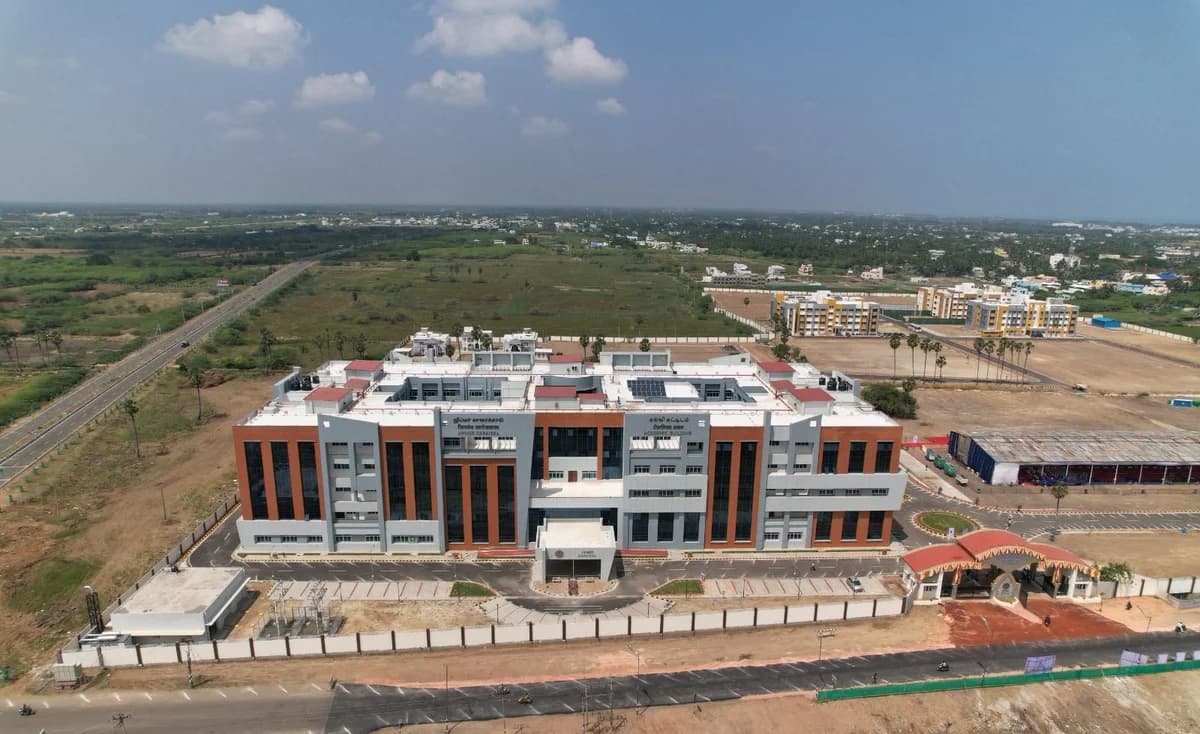
Jawaharlal Institute of Postgraduate Medical Education
Puducherry, Puducherry
GovernmentMBBSRecognized
Overview
LocationPuducherry, Puducherry
TypeGovernment
CourseMBBS
UniversityStatutory Autonomous, Puducherry
MBBS Intake
Loading...
Jawaharlal Institute of Postgraduate Medical Education and Research (JIPMER), located in Puducherry, operates as an Institute of National Importance (INI) under the direct administrative control of the Ministry of Health and Family Welfare, Government of India. This grants it significant autonomy in its internal administration. JIPMER is recognized as a tertiary care referral hospital and holds the #68 position in the Medical category in the NIRF 2025 rankings, with a score of 89.26. Its mission encompasses providing advanced medical education, conducting research, and delivering high-quality healthcare services to the community.
JIPMER is committed to delivering comprehensive medical education and training across undergraduate and postgraduate levels, adhering to national standards.
As a central government institution and an Institute of National Importance, JIPMER typically offers a highly subsidized fee structure for its academic programs.
JIPMER functions as a prominent tertiary care referral hospital, providing extensive clinical services and training opportunities.
The JIPMER campus in Dhanvantri Nagar, Puducherry, provides a comprehensive environment designed to support academic pursuits, student well-being, and overall development.
All MBBS seats are filled through MCC Counselling.
Opening and closing ranks from previous years' counselling.
| Category | Round 1 | Round 2 | Round 3 |
|---|---|---|---|
| EWS | 1,464 | 1,485 | — |
| EWS (PH) | 1,90,011 | — | — |
| General Category | 350 | — | — |
| General (PH) | 1,40,950 | — | — |
| OBC | 807 | 867 | — |
| OBC (PH) | 2,58,535 | 40,960 | — |
| SC | 6,617 | 1,358 | — |
| SC (PH) | 4,95,793 | — | — |
| ST | 8,697 | — | — |
| Category | Round 1 | Round 2 | Round 3 |
|---|---|---|---|
| EWS | 75,661 | — | — |
| General Category | 22,602 | 28,676 | — |
| OBC | 36,804 | 38,596 | 38,734 |
| SC | 84,283 | 1,30,928 | 1,51,839 |
| ST | 7,02,405 | — | — |
Ranks shown are for reference. Actual cutoffs may vary each year based on seat availability, applicant pool, and counselling rules.
Jawaharlal Institute of Postgraduate Medical Education
Dhanvantri Nagar, Puducherry, Pin Code: 605006, State: Puducherry, Fax: 0413-2272067
Pincode: 605006
Get guidance based on your NEET profile, preferences and admission goals.
You May Also Like
Explore other colleges in the same state.
 Deemed
 Government
 Government
 Deemed