Loading...
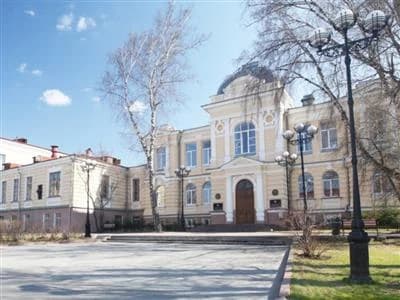
Siberian State Medical University
Russia, Russia
PublicBachelorECFMG Approved
Overview
LocationRussia, Russia
TypePublic
CourseBachelor
UniversitySiberian State Medical University
Established1878
Loading...
Siberian State Medical University is a public NMC approved medical university of Tomsk city, Russia. It offers a fully English medium MBBS program that runs for six years, including a one-year internship. Total cost for the full program, tuition and hostel combined lands between Rs.24.6 lakh and Rs.30.4 lakh. Over 300 Indian students study there now and the university's own hospital and simulation center give students hands-on clinical training from an early stage.
If you're a NEET-qualified student weighing an affordable, English taught MBBS abroad, this guide breaks down every number and step you need.
| Parameter | Detail |
|---|---|
| Established | 1878 |
| University type | Public / State |
| Location | Tomsk, Russia |
| Course duration | 6 years (5 years academic + 1 year internship) |
| Medium of instruction | English |
| Approvals | NMC, WHO, ECFMG, FAIMER, WFME |
| Total 6-year cost | Rs.24.6 lakh - Rs.30.4 lakh (approx.) |
| Indian students enrolled | 300+ |
| International students | 1,500+ from 40 countries |
This table alone answers most of what a NEET aspirant searches for first: recognition, cost, and duration. The sections below explain each number in detail.
Yes. In 2017, Russia's Ministry of Education and Science named SibMed the country's only flagship medical university. That's not a minor title. It means the government picked SibMed to lead reform and set standards for medical training across Russia. In 2021, the university also won a spot in the federal Priority 2030 program, which funds research in personalized medicine, telemedicine and digital hospital systems.
Rankings back this up. SibMed sits among the top three medical universities in Russia and holds 4th place nationally on the Times Higher Education University Impact Rankings. Globally, it ranks in the QS 801-1000 bracket. Founded in 1878 as the first medical school east of the Ural Mountains, the university has trained more than 60,000 doctors and its alumni now work in 65 countries.
Its research record adds further weight. SibMed's work on liver fluke infection as a cause of bile duct cancer in Western Siberia is cited by researchers worldwide. For a student choosing between dozens of Russian medical universities, this mix of federal recognition, ranking and research output is a genuine point of difference, not marketing language.
Yes, the entire MBBS program in Siberian State Medical University runs in English for international students. Lectures, exams and lab sessions all happen in English. This matters because some universities in Russia switch to Russian once clinical years begin, which catches students off guard. SibMed doesn't do that. Students do take structured Russian language classes alongside their coursework but this is meant to help them talk to patients during hospital rotations, not to replace English as the language of instruction.
The course itself spans six years, or twelve semesters. Five years cover academic and clinical training, followed by a mandatory twelve-month internship. This structure clears the National Medical Commission's 2021 rule, which requires a minimum 54-month course plus a 12-month internship. SibMed also follows the NMC's single-university rule: the internship happens at the same institution as the degree, inside SibMed's own clinics. Students don't need to hunt for a separate hospital or return to India to finish this requirement.
Tuition and hostel fees stay fixed for all six years of the program, so there are no surprise hikes mid-course. Here's the full breakdown.
| Academic Year | Tuition (RUB) | Hostel (RUB) | Insurance & Visa (RUB) | Total Annual Cost (RUB) |
|---|---|---|---|---|
| Year 1 | 4,10,000 | 80,000 | 10,000 | 5,00,000 |
| Year 2 | 4,10,000 | 80,000 | 6,000 | 4,96,000 |
| Year 3 | 4,10,000 | 80,000 | 6,000 | 4,96,000 |
| Year 4 | 4,10,000 | 80,000 | 6,000 | 4,96,000 |
| Year 5 | 4,10,000 | 80,000 | 6,000 | 4,96,000 |
| Year 6 | 4,10,000 | 80,000 | 6,000 | 4,96,000 |
| Total | 24,60,000 | 4,80,000 | 40,000 | 29,80,000 |
That six-year total converts to roughly $33,100 to $34,200, or about Rs.26 lakh to Rs.30.4 lakh, depending on the exchange rate. Students pay this directly to the university's official bank account in Russian rubles, which cuts out currency markups and agent commissions that inflate costs elsewhere.
Beyond tuition, plan for one-time costs in your first semester:
University application fee: $200
Ministry invitation letter processing: $50
Visa application fee: Rs.8,000 - Rs.10,000
Document translation, notarization and apostille: Rs.5,000 - Rs.8,000
Airfare from India to Tomsk: Rs.40,000 - Rs.60,000
Compared to private medical colleges in India, where fees often cross Rs.1 crore, this is a significantly cheaper path to a medical degree.
Students would be able to build their base with the help of the different subjects of the Syllabus offered by the Siberian State Medical University. It also has excellent balance of practical theory and is usually accompanied by a lesson plan, an assignment, exam dates and marking criteria. The MBBS course offered by this University has duration of six years and the following syllabus is provided:
| Study Year | Phase | Subjects Covered |
|---|---|---|
| 1st Year | Pre-clinical | Physics, Chemistry, Medical Biology, Genetics, Parasitology, Human Anatomy, Histology |
| 2nd Year | Pre-clinical | Human Anatomy, Histology, Embryology, Cytology, Normal Physiology, Biochemistry |
| 3rd Year | Para-clinical | Microbiology, Virology, Immunology, Pathological Anatomy, Pathological Physiology, Pharmacology |
| 4th Year | Clinical | General Hygiene, Internal Medicine, General Surgery, Ophthalmology, Otorhinolaryngology (ENT), Obstetrics |
| 5th Year | Clinical | Oncology, Neurology, Psychology, Primary Care Medicine, Pediatrics, Emergency Medicine, Cardiology |
| 6th Year | Internship / Clinical Rotations | Supervised clinical training in Internal Medicine, General Surgery, Obstetrics & Gynecology, Pediatrics, Emergency Medicine, and Community Medicine |
Yes, and this sets it apart from many Russian medical universities that rely on outside municipal hospitals. SibMed is one of only six universities in Russia that owns and runs its own multidisciplinary clinic. This teaching hospital treats more than 100,000 patients a year, giving students direct, repeated exposure to real cases across surgery, obstetrics, urology, neurology, endocrinology and infectious disease wards.
Before students step onto hospital floors, they train at SibMed's Simulation Center, one of only two in Russia accredited by the European Society for Simulation in Medicine (SESAM). Students practice procedures safely in emergencies that are recreated using augmented reality, 3D lecture halls and robotic patient models.
This is backed up by faculty quality. 80% of teachers have a PhD/Doctorate in Medical Sciences, with more than half of them currently practicing as clinicians. During hospital rotations, the student-to-instructor ratio stays at 1:7, which means closer supervision than most students get at larger institutions.
The university hospital runs a number of specialty clinics, including:
SibMed graduates pass the Foreign Medical Graduate Examination at a rate of 42.31%, according to official National Board of Examinations in Medical Sciences results. Compare that to the average pass rate for Indian students returning from Russian universities, which sits between 25.5% and 29.54%. SibMed's curriculum leans heavily on clinical problem-solving and systems-based learning, which lines up closely with what the and its successor, the National Exit Test, actually assess. Students also get mentorship from seniors who've already cleared these exams.
Monthly expenses are in the range of Rs.15,000 to Rs.28,000, including food, local transportation and personal expenses, which is equivalent to $200-$350. Shared kitchens are used in hostels and so the monthly cost of groceries would be around Rs.5,000 to 9,000, if you cook on your own. University canteens are also available with meals costing 80-150 rubles a pop, and there are also Indian mess halls close to campus.
SibMed runs six dormitories for international students, with rooms shared by two to four people. Each room comes with a study desk, bed, wardrobe and central heating. Most hostels sit within 300 to 1,000 meters of academic buildings, so the walk to class takes 5 to 15 minutes.
Winters in Tomsk are serious business. Temperatures drop to -15°C to -25°C on average, and can fall as low as -35°C during cold spells. Indoor spaces stay well-heated, but you still need to prepare before you land:
Yes. Tomsk sits over 3,500 kilometers east of the conflict zones near Russia's western border. It's a university town where the local economy runs on education and research, which makes for a calm, stable environment day to day.
Campus security backs this up with concrete measures. Hostels and academic buildings run 24/7 security desks and entry require biometric checks and student ID verification. The corridors, gates and shared spaces in the hostels are covered by CCTV and the university district is patrolled regularly by local police. SibMed also maintains active Indian student associations with the University and the Embassy of India in Moscow to assist students with safety or administrative matters.
Indian candidates must have following eligibility criteria to apply:
There are six steps in the admissions process:
There's no donation or capitation fee at any stage. Since English-medium seats are capped at around 150 per year, applying between May and July gives you enough buffer for the invitation and visa process to clear before the academic year starts.
All documents which are not in Russian must be translated into Russian and notarized. The application process has two stages: admission to the university, and visa application. The following is the detailed list of documents needed:
SibMed runs four merit-based scholarship options for international students.
| Scholarship | Eligibility | Benefit |
|---|---|---|
| Academic Excellence Scholarship | Minimum GPA of 3.8, full-time student | $5,000 annual tuition reduction |
| International Student Merit Award | International status, leadership potential | $4,000 annual award (1-4 years) |
| STEM Fellowship | Strong performance in foundational sciences | $4,200 annual grant |
| Need-Based Grant | Documented financial hardship | Variable tuition concession |
These reduce the overall cost further for students who qualify, on top of the university's already-fixed tuition rates.
Siberian State Medical University
Siberian State Medical University, Russia, Russia, India
Get guidance based on your NEET profile, preferences and admission goals.
Explore More
Other medical universities in Russia.
 Russia
 Russia
 Russia
 Russia